
Retail Sales & Producer Price Inflation Boster Case For Fed Rate Hike
November Retail Sales, Producer Inflation Bolster Case for Rate-Hike
Any lingering hopes that the Federal Reserve wouldn't raise interest rates when it has a chance to next week suffered Friday on the heels of news regarding last month's producer price inflation and retail spending. Both were strong enough - and in some ways better than expected - to bolster an already-good argument in favor of a rate hike.
Last month, overall producer price inflation (PPI) reached 0.3% versus expectations for a 0.1% decline. Core PPI (not counting food and energy costs) grew 0.3% as well, topping expectations for a 0.1% increase. On an annualized basis, though total PPI now stands at a rate of -1.2% thanks to the ongoing demise of oil, the core producer price inflation pace is a healthy 0.5%, bouncing back from October's reading of 0.1%. It's not red hot, but odds are good the Fed's voting members will want to nip inflation in the bud early.
Producer Prices Chart

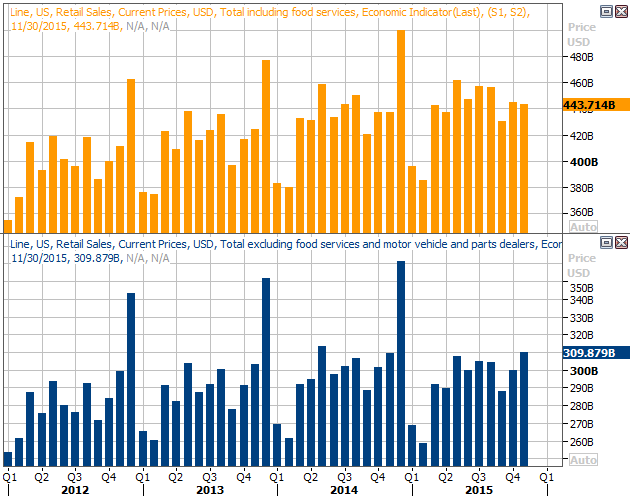
As for retail sales, they too were up, and better than expected on the one front where it matters most right now. Last month, retail spending grew 0.2% overall, and was up 0.4% when taking automobiles out of the equation. Economists were looking for 0.3% increases of both figures. Both figures moved in a fairly typical manner last month.
Although auto sales fell a little short of expectations, the strong showing for total retail sales in November says consumers are feeling confident and opening their purse strings at a critical time of year. Although December is the biggest shopping month of the year, November is the second-biggest. If we do well now, it bodes well for December as well as for the whole year.
Retail Sales Chart

November's strength also quells fears about tepid Thanksgiving weekend spending. Much of that spending is now being doing well before or well after that not-quite-so-critical time now.
The National Retail Federation still expects this year's holiday spending to roll in 3.7% higher than last year's spending in November and December.